Why the date format matters on a keepsake
A date can hold a birth, a wedding, a farewell or a milestone, but on a small piece of jewellery or a compact plaque there is only so much room. The format you choose affects not just style, but also readability, spacing and how the piece feels in the hand.
In South Africa, people often mix local preferences with family traditions. Some want the day first, others prefer the month first, and many families use a full written month to avoid confusion. That is especially useful on memorial gifts, where a date should be clear without needing explanation later.
- Use a short format for very small surfaces, like pendants or charms
- Use a full written month for memorial plaques and memory book covers
- Keep the style consistent if the date appears more than once in a set
Choosing between numbers, words, and Roman numerals
There is no single correct way to write a date. The best choice depends on the item size, the engraving method, and the overall look you want. A date engraved on a silver pendant needs a different approach from a date printed inside a photo book or etched onto a plaque.
Numeric dates are practical and compact. Written dates feel softer and more formal. Roman numerals can look elegant, but they are not always the easiest to read at a glance, especially on smaller items. If an item will be worn daily, clarity usually matters more than ornament.
- Numeric: 14.02.2024 or 14/02/2024, useful for limited space
- Written: 14 February 2024, ideal for memory books and plaques
- Roman numerals: XIV.II.MMXXIV, best used where the surface allows enough spacing
If you are unsure, a proof helps. It lets you check spacing before the engraving is made, which is especially useful when a surname, short message and date all need to fit neatly together.
South African date styles that read clearly
For local customers, the safest option is usually day month year, because it avoids confusion between 03/04/2024 and 04/03/2024. That matters when the keepsake is meant for family use across different provinces or for relatives living overseas who may read dates differently.
A clean format also helps on items that may be handled in low light or kept in a display box. At our Lynnwood studio in Pretoria, many families ask for a format that feels personal but still looks balanced on the piece. That is especially true for memorial jewellery and engraved urn plates.
- Day month year: 21 March 2026
- Day and month only: 21 March, when the year is not needed
- Month and year only: March 2026, useful for long-life remembrance pieces
For families in Pretoria, Centurion or Midrand, it helps to decide early whether the date should read plainly or sit more softly within the design. That small choice changes the whole finished look.
Matching the date to jewellery, plaques and memory books
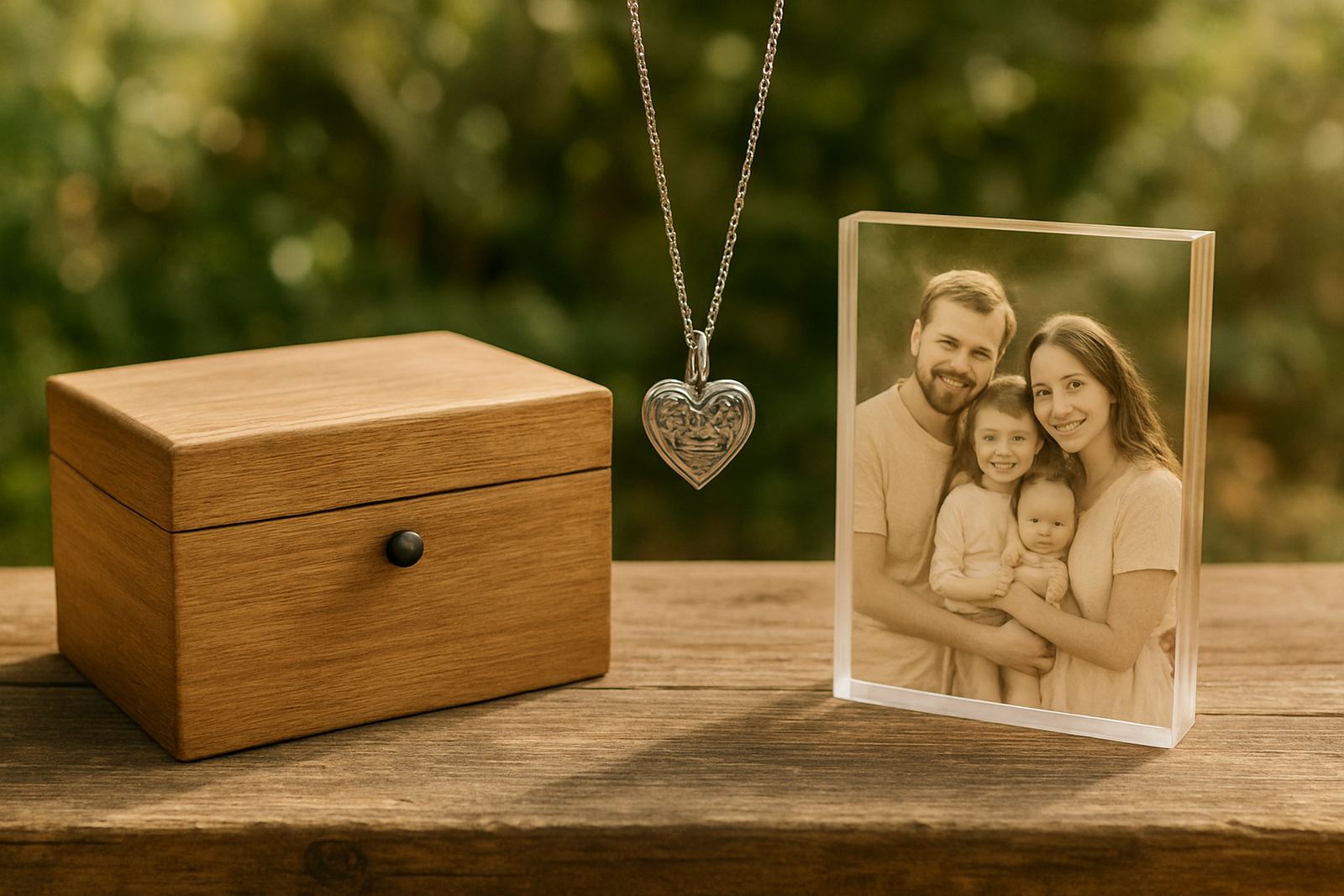
Different keepsakes suit different date layouts. Jewellery usually needs shorter text because the engraving area is smaller and curved surfaces can affect legibility. Plaques can carry fuller wording, while memory books give you space to tell the story with dates placed neatly in headings, captions and dedication pages.
For personalised jewellery, a compact numeric date often works best. For plaques and urn inscriptions, a written date usually feels more dignified and easier for visitors to read. In photo books, the date can be part of the caption, a chapter title, or the opening page for a special event.
- Jewellery personalisation: keep dates short and evenly spaced
- Plaque personalisation: use fuller wording for a more formal finish
- Photo book design: place dates near images so the memory reads naturally
When a family orders a set, such as a pendant, plaque and memory book together, keeping the same date style across all three pieces creates a calm and considered result.
What to check before approving a proof
A date is easy to overlook because we read what we expect to see. That is why proof approval matters. A quick check can prevent a costly mistake, especially where a birth date, anniversary or memorial date is involved.
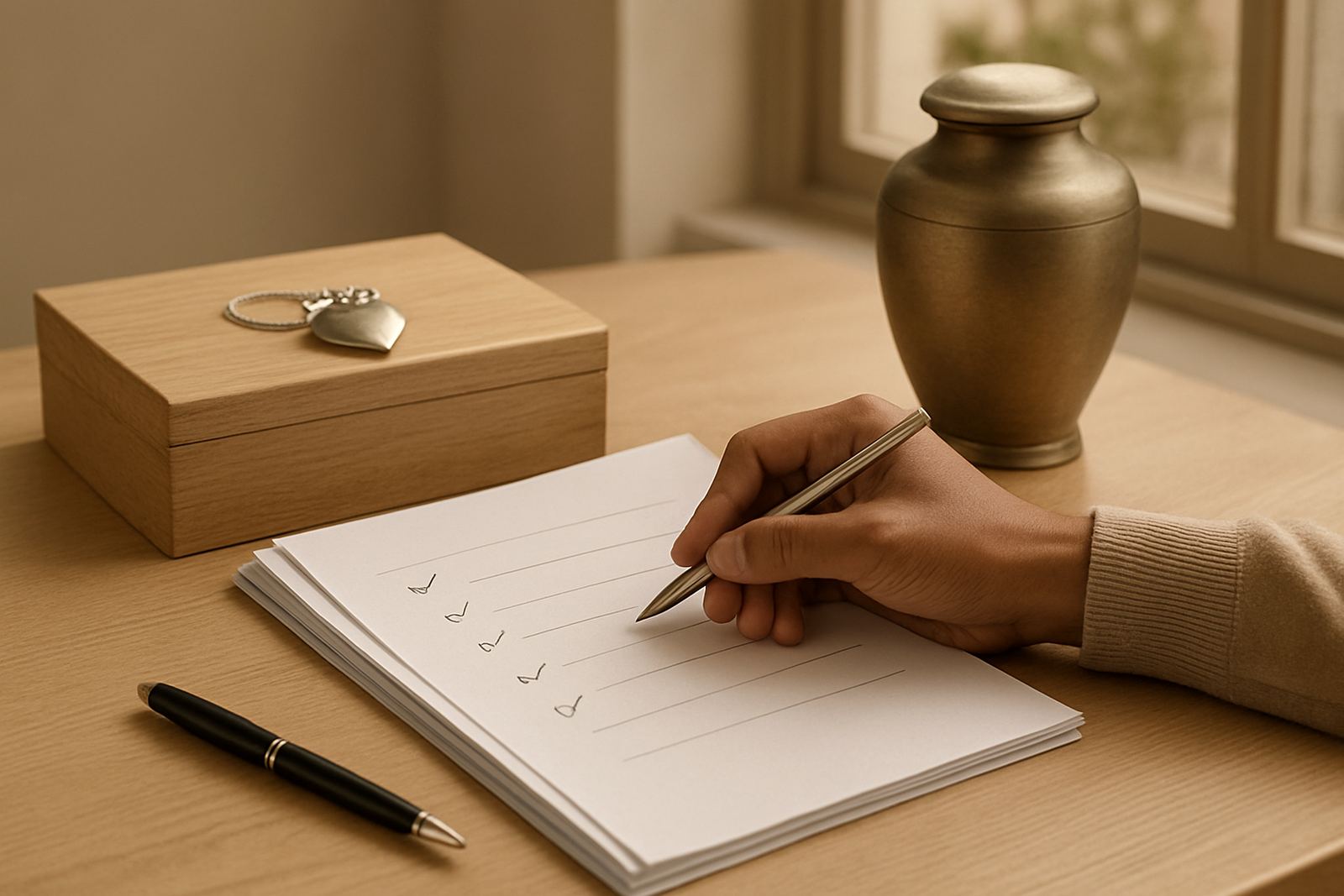
Before you approve, read the date out loud and check every part of it. If you have sent the details through an enquiry form, it helps to compare them against your original record or family document. Small issues like a swapped month, a missing zero or a wrong year can be hard to fix after engraving.
- Confirm the exact day, month and year
- Check whether the format should be numeric or written out
- Look at spacing, punctuation and line breaks on the proof
- Make sure the same date is used on every item in a bulk family order
This step matters even more for memorial work, where the meaning is deeply personal and there is no room for guesswork.
A local example from Pretoria families
A family in Lynnwood may order a keepsake pendant, a small plaque for the home and a memory book for the grandchildren. They might choose 18 September 2023 for the pendant because it fits neatly, then 18 September 2023 written in full on the plaque, and a title page inside the book that says In Loving Memory of 18 September 2023. Same date, different treatment, each one suited to the item.
That kind of consistency is useful when relatives collect pieces from different pickup points such as Menlyn, Brooklyn or Garsfontein, or when a courier needs to send items safely to Durban, George or Polokwane. Clear dates make each item easier to identify and keep in the right family hands.
- Use one master date format for the whole order
- Adjust only the length, not the meaning
- Keep the tone steady across jewellery, plaques and books
Beloved’s team in Pretoria works with engraved jewellery, urn inscriptions, plaque personalisation and photo book design every day, so the date choice is handled with the same care as the wording around it.
A simple rule for choosing the right format
If the surface is small, shorten the date. If the piece is meant for display, write it out. If the date could be misunderstood, use the clearest version available. That one rule solves most decisions and keeps the finished piece tidy.
Dates are not only information. They are part of how a memory is held. A good format gives the date room to breathe, whether it is engraved in metal, printed in a memory book, or placed on a plaque for someone special.
When in doubt, choose clarity first, then style. The right format is the one that still feels beautiful ten years from now.