
Start with one clear theme the child can understand
When a memory book has too many ideas packed into it, children often lose interest before they reach the pages that matter most. A clearer approach is to choose one theme, such as family, early school years, a special grandparent, or the story of a first home. That gives the book a sense of order and helps the child understand what the pages are about as they get older.
For younger children, keep the wording direct and familiar. Short captions work well. If the book is for a child in Pretoria, for example, you might include pictures from visits to the park in Lynnwood, a school concert in Menlyn, or a weekend family lunch in Brooklyn. These are everyday moments, but they carry real meaning when they are gathered in one place.
A good memory book does not need to cover everything. It needs a few carefully chosen details that the child can return to over time.
Choose photos that tell a story, not just a timeline
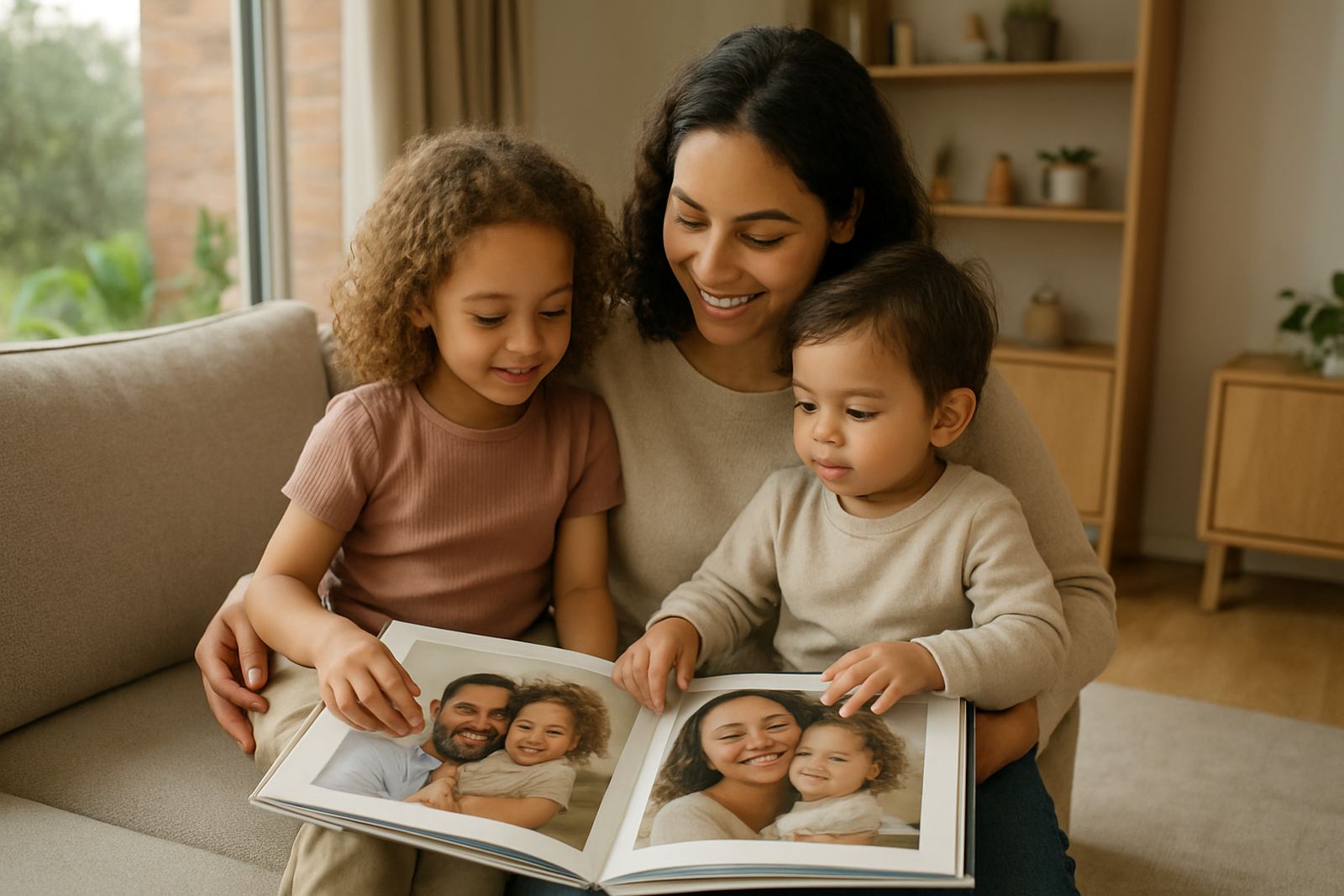
Children usually connect best with photos that show people doing something, not only posing for the camera. A picture of a grandmother helping with baking, a child feeding a pet, or siblings laughing in the garden often means more than a formal group photo. These images show relationships in a way that is easy for a child to recognise.
- Include a mix of close-up and wider photos so faces and places are both clear.
- Use a few current photos, then add older ones if they help explain family stories.
- Leave some white space around each image so the page does not feel crowded.
- Add dates or short notes where needed, but keep the wording simple.
If a child is helping choose the photos, let them be part of that process. Even a five-year-old can point to a favourite picture or tell you which memory makes them smile. That small bit of involvement often makes the final book feel more special.
Captions children can grow with
The best captions for children are clear, kind and specific. Instead of writing long paragraphs, use phrases that explain who is in the photo, what was happening, and why the moment mattered. A child may not read every word straight away, but they will grow into the book, and the notes should still make sense years later.
A caption can be as simple as, “Your Ouma taught you how to knead dough in our kitchen in Centurion,” or “This was the day we all laughed when the kite would not fly at first.” These small details bring the memory back to life. They also help children understand family roles, traditions and the places that shaped them.
- Use the child’s name often, so the book feels personal to them.
- Keep sentences short and easy to read aloud.
- Include names of relatives, pets and places where useful.
- Write in the present or past tense consistently on each page.
It also helps to leave a few blank lines in the book for future notes. Children change quickly, and a memory book should be able to change with them too.
Add tactile details that feel comforting in small hands
Children respond strongly to texture, colour and shape. A memory book that uses sturdy pages, neat binding and a cover that feels pleasant to hold is more likely to be taken out often. Soft tones, rounded corners and clear photo placement can make the book easier for smaller children to manage.
Personal touches such as a name on the cover, a special date, or a short dedication at the front page can make the book feel like it belongs to the child from the start. If the book is made for a memorial purpose, those details should be gentle and respectful, with enough space for reflection without feeling heavy.
Families in coastal areas often ask for stronger finishes because humidity can affect paper over time, while households in Pretoria usually want something practical that can be stored safely during load-shedding evenings or moved between homes with ease. A good memory book should be suitable for everyday handling, not only display.
Make room for milestones as the child grows
A memory book should not stop at early childhood unless that is the intention. Children love seeing how they have changed, and older children often enjoy reading about their own milestones. A living memory book can include school achievements, sports days, holidays, drawings, first prayers, or messages from family members on special birthdays.
One practical method is to leave certain sections open for later updates. That way the book becomes a growing record instead of a finished object that is only looked at once. Parents, grandparents and guardians can add notes at different times, which makes the book feel shared rather than fixed.
- Reserve one page for each birthday year if you want the book to continue over time.
- Include a section for school, family and special outings.
- Add a page for messages from parents, siblings and grandparents.
- Keep one or two blank pages for new photos or drawings later on.
This approach works especially well for blended families, memorial gifts and books prepared for a child who may one day want to understand their own story more fully.
How local families use memory books in Pretoria and beyond
In Pretoria, many families use memory books for birthdays, bereavement support, adoption journeys and family heritage projects. A grandmother in Lynnwood may want a book filled with baby photos and notes from the first year. A father in Garsfontein may prefer a book that records a child’s relationship with a late parent, with messages that can be read later when the child is older. In Midrand, some families prepare books as gifts for a move, so the child can keep familiar faces and places close.
Because delivery is available nationwide, families outside Pretoria can still organise a personalised keepsake without needing to travel. For collection, pickup options in areas such as Menlyn, Brooklyn, Centurion, Silverton, Montana and nearby routes make it easier to collect a finished book when it suits the family. The point is convenience, but the final result should still feel carefully made and handled with respect.
When a child opens a memory book and sees their own name, their own people and their own small history, the book becomes more than a gift. It becomes part of how they remember where they belong.
A simple checklist before the book is finished
Before approving the final version, it helps to go through the book page by page and check that the story feels complete. Small errors are easy to miss when you have looked at the same photos for too long, so a clear checklist keeps things on track.
- Confirm all names are spelled correctly.
- Check dates, places and captions for accuracy.
- Make sure the photos are in the right order for the story you want to tell.
- Read the captions aloud to hear whether they sound natural for a child.
- Leave enough space for future additions if the book is meant to grow.
A calm, well-planned memory book gives children a way to return to family stories when they are ready. It should feel honest, warm and easy to open again and again, even years later.